 onstantinos Delikostantis comes from Imb ros.
He graduated from the Theological School of Halki
in 1970. He completed
his postgraduate and doctoral studies in Philosophy, Theology, and Social Ethics in Germany, at
the University of
Tübingen (1971–1982). In 1989, he obtained a master’s degree in Pedagogy from the Aristotle
University of Thessaloniki.
From 1991 to 2001, he taught as an Associate Professor and Professor of Philosophy of Religion
at the Aristotle
University, and from the academic year 2001–2002, as Professor of Philosophy and Systematic
Theology in the Department
of Theology at the University of Athens.
onstantinos Delikostantis comes from Imb ros.
He graduated from the Theological School of Halki
in 1970. He completed
his postgraduate and doctoral studies in Philosophy, Theology, and Social Ethics in Germany, at
the University of
Tübingen (1971–1982). In 1989, he obtained a master’s degree in Pedagogy from the Aristotle
University of Thessaloniki.
From 1991 to 2001, he taught as an Associate Professor and Professor of Philosophy of Religion
at the Aristotle
University, and from the academic year 2001–2002, as Professor of Philosophy and Systematic
Theology in the Department
of Theology at the University of Athens.
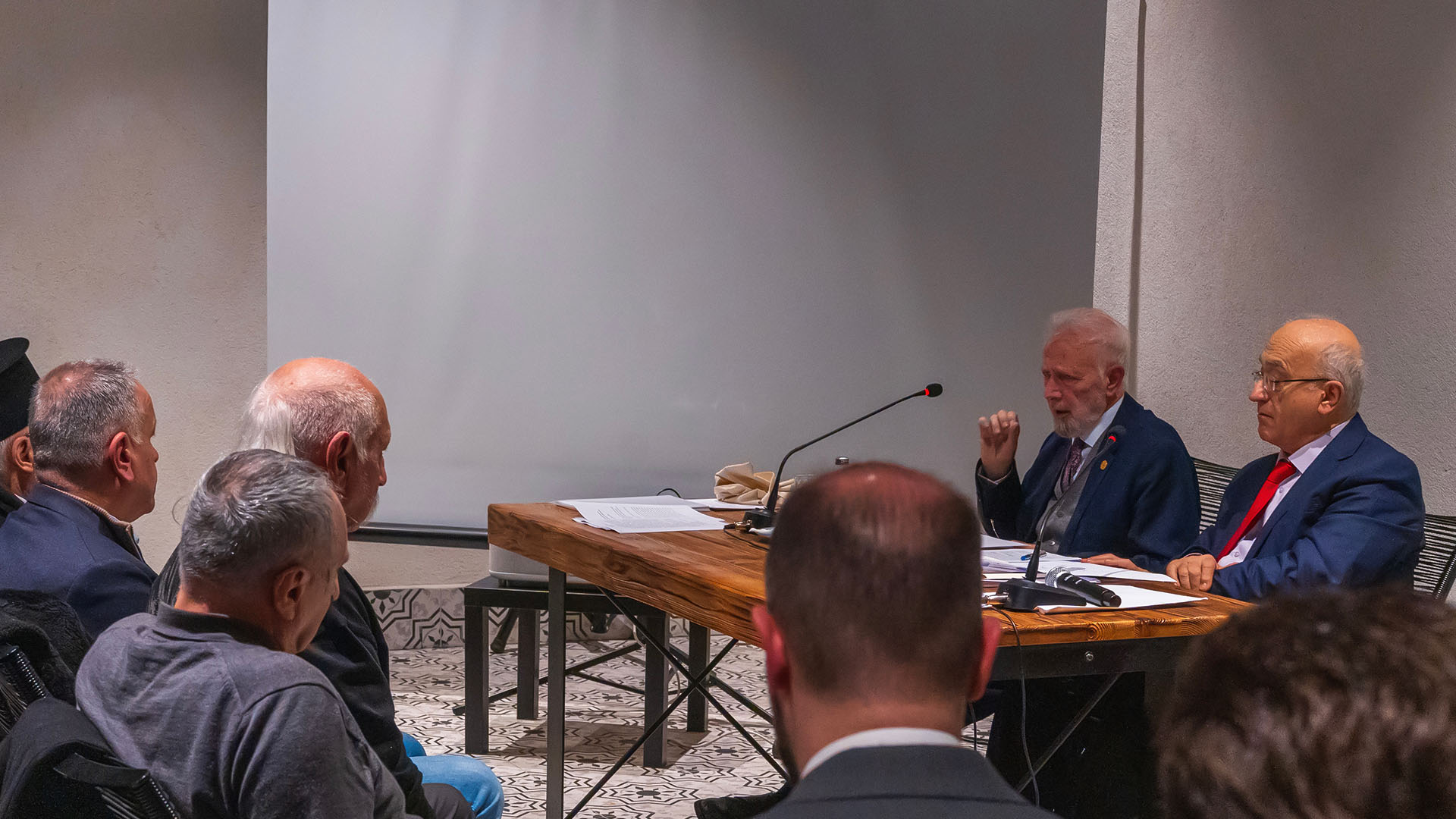
He served twice as Department Chair and for a three-year term as Dean. He has taught and delivered lectures at various university departments in Greece and abroad and has participated in numerous scientific conferences as a keynote speaker. From 2005 to the present, he teaches Systematic Theology at the Institute of Postgraduate Studies in Orthodox Theology in Chambésy, Geneva.
He participates in ecumenical dialogues as a member of delegations of the Great Church (Ecumenical Patriarchate) and as a theological advisor. Following his retirement from the University of Athens, he assumed the position of Director of the First Patriarchal Office at the Phanar.
His written work focuses on the fields of philosophical, theological, and pedagogical anthropology, the philosophy of religion, the philosophical and theological approach to human rights, the philosophy and theology of freedom, the dialogue of Orthodoxy with Protestantism and modernity, as well as school religious education.
Despite serving as the Patriarchal center for only a short period, Panagia Paramythia hosted one of the most important ecclesiastical gatherings of the post‑Byzantine era: the Great and Holy Synod of 1593. This synod produced landmark decisions that shaped Orthodox Christian history and global geopolitics. The Patriarchs granted autocephaly (independence) to the Russian Orthodox Church, elevating Metropolitan Job of Moscow to Patriarch of Moscow and All Russia. The council also formally rejected the Gregorian calendar, reaffirming the Julian calendar established by the First Ecumenical Council of Nicaea (325) for determining the date of Easter (Pascha).
Since 2005, Konstantinos Delikostantis has held the title of Offikialios (an honorary ecclesiastical title bestowed by the Ecumenical Patriarch upon laypeople, scientists/academics, entrepreneurs, prominent figures) in recognition of their contributions to the Church, the Nation, and society. It is not a clerical office, but an honorary distinction with roots in the Byzantine tradition) of the Ecumenical Throne. He is married to philologist Athanasia Michalopoulou and is the father of a son, Zafierios, who is a graduate of the Department of Psychology at the University of Athens and holds a Master of Science degree in Marketing.
Today, Panagia Paramythia remains a significant reference point in the study of Orthodox heritage, Phanar history, and the evolution of the Ecumenical Patriarchate in Istanbul.