he Church
of Panagia Paramythia (also known as the "Church of Consolation" or the Vlach-Saray)
holds a place of immense
spiritual and geopolitical importance within the history of the Ecumenical Patriarchate of
Constantinople. Located in
the Phanar district of Istanbul, this site served as the administrative heart of Eastern
Christianity during a pivotal
era in the 16th century.
he Church
of Panagia Paramythia (also known as the "Church of Consolation" or the Vlach-Saray)
holds a place of immense
spiritual and geopolitical importance within the history of the Ecumenical Patriarchate of
Constantinople. Located in
the Phanar district of Istanbul, this site served as the administrative heart of Eastern
Christianity during a pivotal
era in the 16th century.
Architectural Evolution and Design
The architectural history of Panagia Paramythia is a testament to the resilience of the Greek and Orthodox communities in Constantinople through centuries of fires and reconstructions.
- Original Construction (c. 1578): The church began as a rectangular stone basilica covered with plaster, featuring a round arch projecting toward the eastern side and a gabled terracotta roof. Its interior featured marble slab flooring, a single window, and a wooden narthex and iconostasis.
- Expansion: As the congregation grew, later additions expanded the structure into a three-aisle basilica. Each aisle was adorned with niches and an arched window, significantly increasing natural light and interior grandeur. As part of this growth, the western wall of the southern entrance was integrated into the western facade of the church.
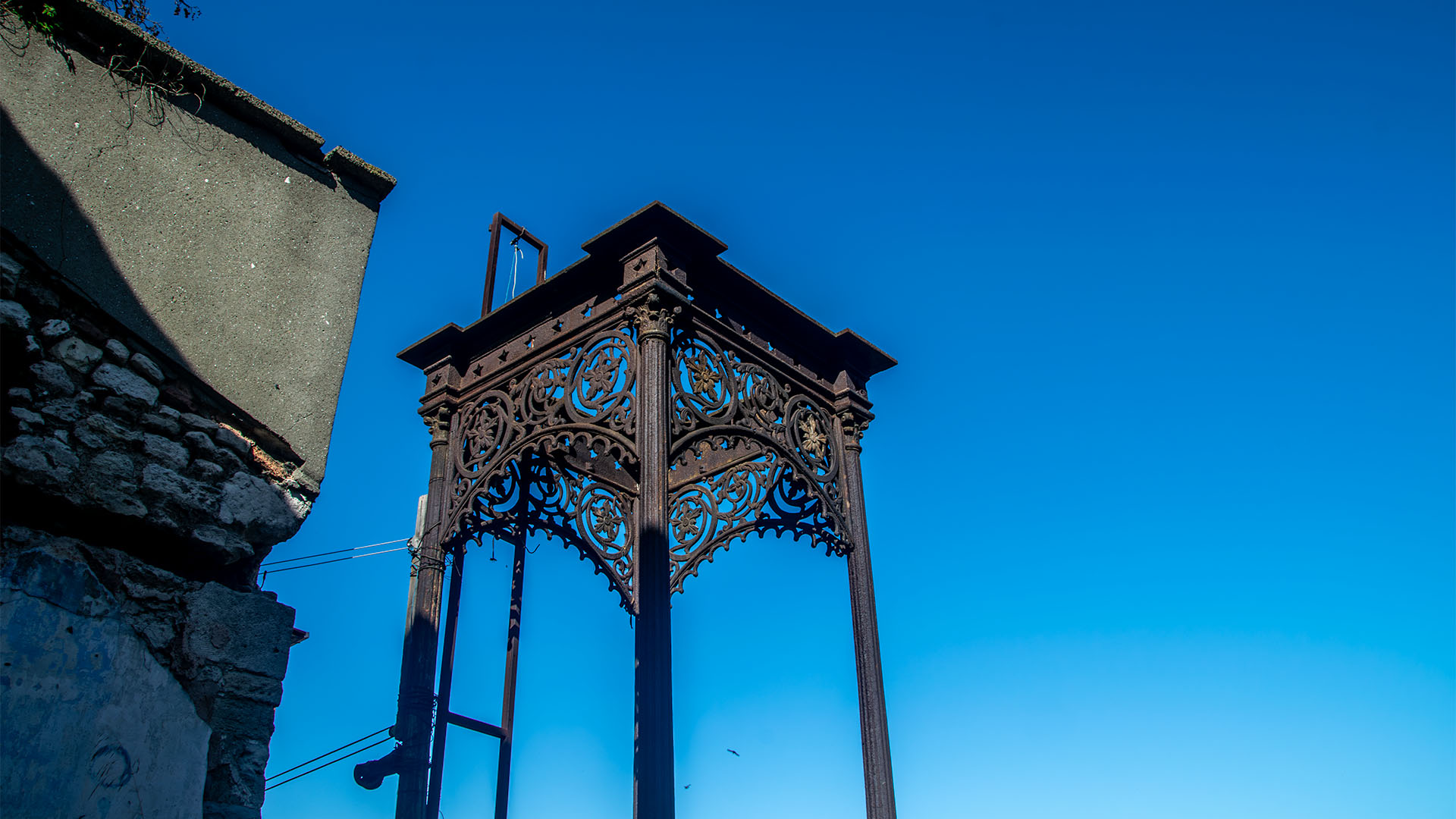
- The Complex: At its height, the site was more than a single church; it was a complex featuring three adjacent buildings and a prominent iron bell tower, which was added later in 1833.
Timeline of Key Historical Phases
- 1529: Sultan Suleiman I bequeaths the site to the princely family of Vlad Înecatul (Vlad Vintilă), Voivode of Wallachia, earning the property its local name Vlach-Sarai ("Palace of the Wallachians").
- c. 1578: Completion of the original stone basilica structure.
- 1587–1597: The Patriarchal Era: Following the confiscation of the Pammakaristos Church by Sultan Murad III (which was converted into the Fethiye Mosque), the Wallachian princes in the Phanar offered Panagia Paramythia to the Patriarchate. It served as the seat of the Ecumenical Patriarch for eleven years before moving briefly to St. Demetrius in Xyloporta and finally to its present location at St. George in Diplofanarion (Fener).
- 1593: The Great and Holy Council is held within these walls, resulting in two of the most significant geopolitical and theological decisions in Orthodox history.
- 1640 & 1729: The church suffers significant fire damage and is meticulously rebuilt on both occasions.
- 1833: Installation of the historic iron bell tower.
- 1974: A devastating fire destroys the main structure. In the aftermath, the historic iron bell tower is lost to scrap metal pilfering.
- 2024: The Panagia Paramythia Foundation Committee is formed with the goal of restoring the entire church property, rebuilding the sanctuary, and restoring the historical annex structures for intercultural and interfaith community events.
Significant Historical Events and Global Impact
While Panagia Paramythia served as the Patriarchal seat for just over a decade, the decisions made during the Great and Holy Council of 1593 fundamentally reshaped the Christian world.
1. The Elevation of the Russian Orthodox Church
In 1593, the Patriarchs gathered here to grant the title of Patriarch to the Russian Orthodox Church's presiding hierarch, elevating Metropolitan Job of Moscow to Patriarch of Moscow and All Russia. This made the Patriarchate of Moscow the Fifth Patriarchate.
- Impact: This move integrated the Slavic peoples into the spiritual and artistic sphere of the Ecumenical Patriarchate. Today, the Russian Orthodox Church remains the largest Orthodox body in the world.
2. The Rejection of the Gregorian Calendar
During the 1580s, Pope Gregory XIII sent three separate emissaries to the Patriarch of Constantinople requesting that the Orthodox Church adopt his "new" Gregorian calendar. The Council of 1593 held at Panagia Paramythia formally rejected this change.
- The Reason: The Council upheld the decree of the First Ecumenical Council of Nicaea (325 AD), which specified the use of the Julian calendar for calculating Pascha (Easter) as the first Sunday following the first full moon after the vernal equinox.
- Impact: This decision is why the calendars of the Eastern and Western Christian churches for celebrating Easter are not aligned and often fall on different Sundays.
Legacy of the Vlach-Saray
Sultan Suleiman I originally set aside the Phanar district for the Orthodox Christian population to draw non-Muslim citizens back to Constantinople and utilize their connections to Western Europe. The district rapidly developed into a vibrant, multinational center housing not only the Ecumenical Patriarchate, but also dependencies of the Patriarchate of Jerusalem and the Monastery of Saint Catherine in Sinai, along with growing communities of Armenians, Bulgarians, Romanians, and Moldovans.
Under Ottoman rule, the empire's Eastern Orthodox population formed the Rum Millet, with the Patriarch serving as its recognized head responsible for spiritual, political, and civil judicial matters. Influential Christians—the Phanariotes flocked to the area, serving as key administrators and diplomats within the empire. Panagia Paramythia stood at the very heart of this political, economic, and spiritual hub, notably serving as the church where the vassal princes of Romania were crowned.
Though the physical structure was lost to the fire of 1974, its legacy as a site of global diplomacy, imperial history, and theological steadfastness continues to define the Phanar. Through the modern initiatives of the Panagia Paramythia Foundation Committee, the complex is set to reclaim its historical role as a center for community, intercultural dialogue, and interfaith engagement.